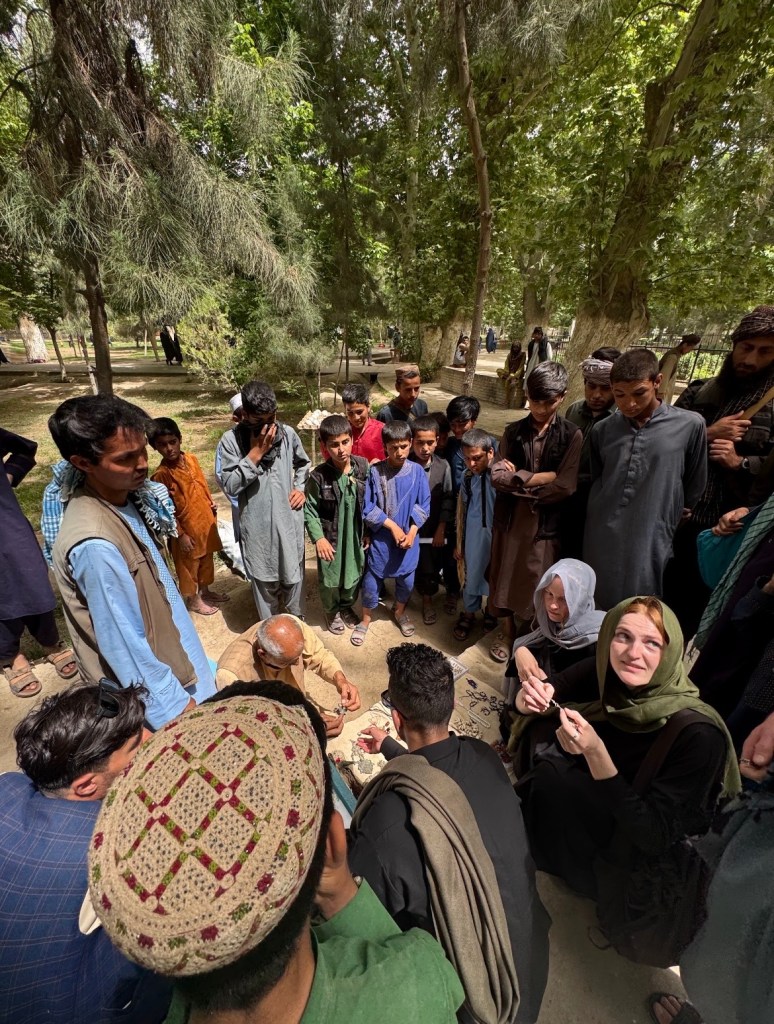
My perspective on the situation in Afghanistan has changed more times than I can count; before I entered the country, while I was there, and in the months after I left. Before I went, I was expecting the country to be visibly “dangerous”, and to see the oppression with my own eyes. And I did, but not nearly to the extent that I had anticipated. When I first landed in Kabul, I was shocked at how “normal” everything felt. After we landed and dropped our bags at the hotel (which did have a hefty amount of security, including getting felt up in a closet every time we entered), we headed to dinner. It was nighttime, and we strolled through the streets of Kabul, not a care in the world, and it was close to midnight when we walked back to the hotel. I will say, I have no idea what it would have felt like doing that walk alone, but with the group it seemed completely safe, and there were no (visible) Taliban to be seen. The rest of the time in Kabul also felt surprisingly calm. However as we started touring around the city the oppression that local women face became more apparent. We saw very few women in the full burkas that you see on the news, rather most women were wearing loose-fitting hijabs and abayas, so that was not the oppression that stood out to me the most. What did truly shock me the most in Kabul was how many places local women were not allowed into. As tourists, the women in my group as well as myself were allowed into mosques, parks, and landmarks that local women could not enter. It felt very strange being the only four women among hundreds of Afghan men in these various locations, but aside from the physical uncomfortability it made me think about the hypocrisy of the Taliban. For example, if the Taliban defines themselves as devoutly Muslim and practitioners of Sharia law, why on earth would women not be allowed into mosques, the literal place of Islamic prayer? And on the note of Taliban hypocrisy, there are so many other ways in which it became incredibly evident that the Taliban justify all of their oppressive practices using Islam, when in fact Islam says none of it. One of the things I noticed right away was that all of the Taliban we encountered were wearing some form of gold, whether it be a watch, a chain, etc. Yeah, well the Hadith (the teachings of the prophet) say that men wearing gold is haram. So please explain to me why a woman can’t pray in a mosque, the ultimate expression of religious faith and devotion, but every single Taliban man who claims he is a devout servant of Allah is blatantly ignoring the words of the prophet? Doesn’t make a whole lot of sense to me. Obviously there are far more examples, and many of them way more harmful than the Taliban wearing gold. However, this is the example that first made me see in front of my eyes that the Taliban was using whatever excuse necessary to control the women of their country.
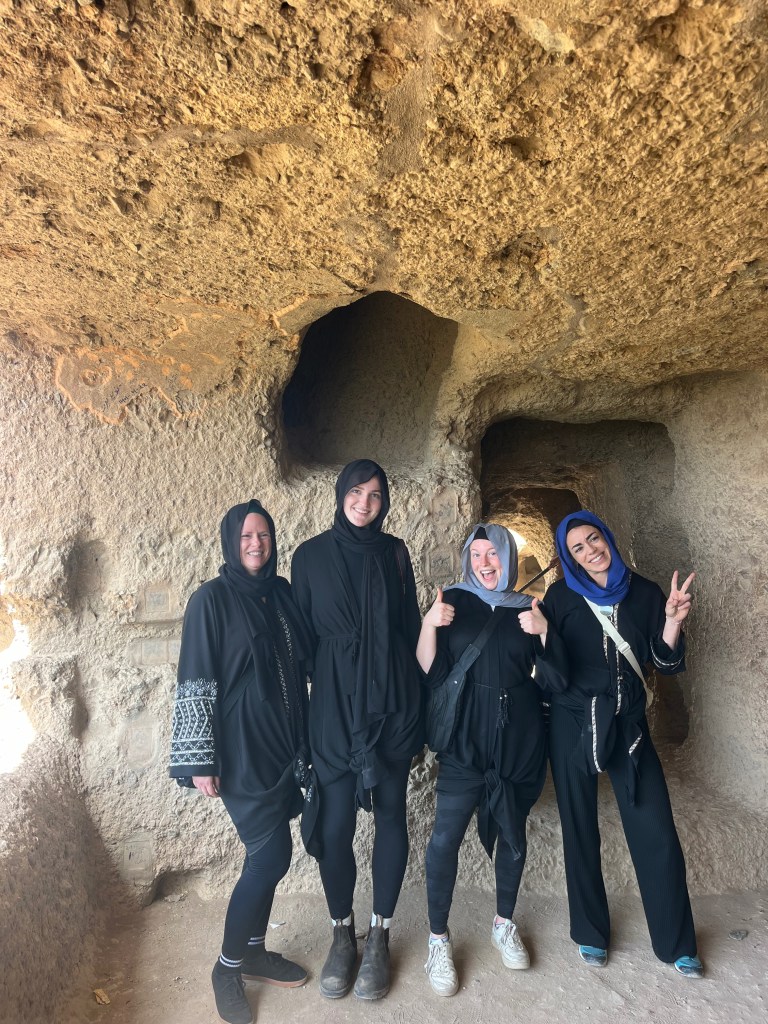
You know what’s hard? Hiking in an abaya. Climbing the Buddhas of Bamiyan was a humbling experience. The second we came into the Taliban guard’s view, our guide told us to pull the abayas back down.
So despite everything I just said, I am guilty of thinking the situation in Afghanistan was getting better rather than worse while I was there. In my defense, that is what the quite a few of the Afghans I spoke to believed. However, most of the Afghans I spoke to were men. It was my few interactions with women and girls that really made me stop in my tracks and go, “Oh. This is really bad.” Although that being said, my very first interaction with an Afghan man was on the plane from Dubai to Kabul, and that was a really interesting conversation that gave me a thought to think about right off the bat. My group and I were on the plane, obviously the only tourists, and an Afghan man speaking perfect English asked us why we were heading to Afghanistan. We started up a conversation, and he told us that he had lived in Los Angelos since he was young. He was sent back to Afghanistan with his wife and daughters when Trump came into office (I am not completely sure what happened in terms of legality, deportation, etc.), and went back to his motherland of Kandahar, Afghanistan. His daughters had been in university in Los Angelos, an incredibly liberal city, before their lives were uprooted and they were taken to arguably the most oppressive place in the world for women. I truly can’t imagine. So why did I think it was getting better there? Well for starters, my conversations with the Taliban were pretty deceiving. They discussed wanting their daughters to get educated, they had questions about our lives, they joked around with us, they wanted to take pictures with us. I think I was expecting a lot more hostility towards myself as a woman, and did not quite realize that their hatred was extremely directed towards the women living and struggling in Afghanistan. My experience of safety in Afghanistan as a tourist, despite being female, was very positive. And it in NO WAY reflects the reality of the situation that Afghan women are facing every single day.
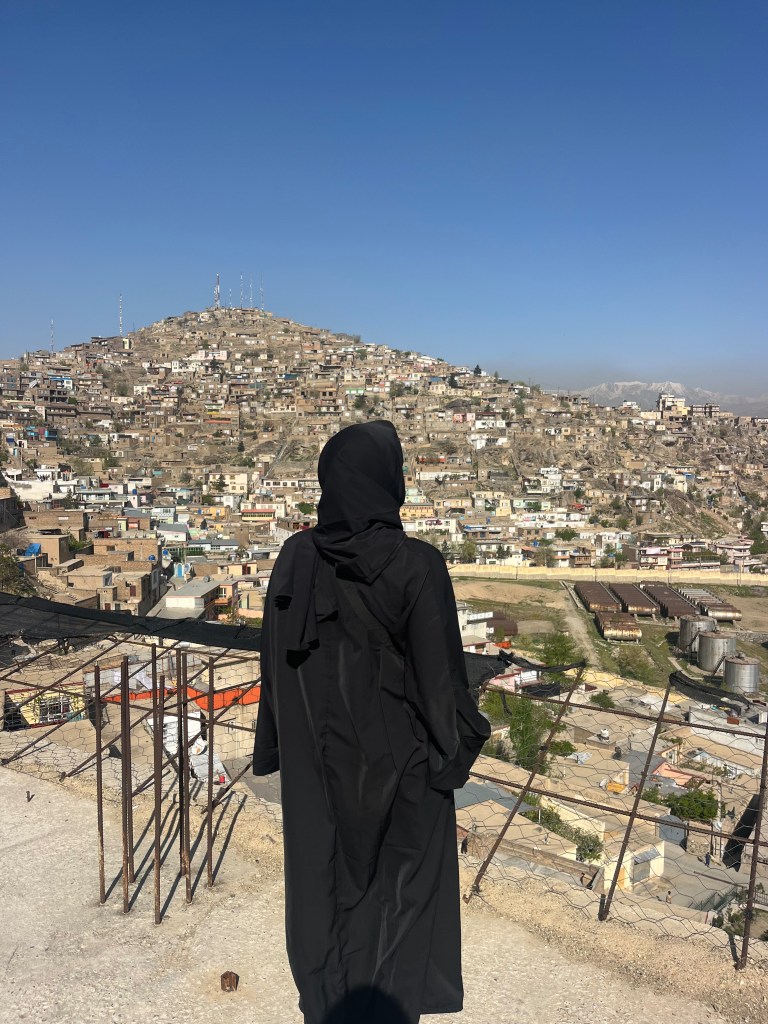
Some of my guide’s perspectives were interesting as well, and looking back, I believe it was out of pure hope and not wanting to accept the horrible, harsh reality of the situation. He thought (hoped) that the situation may get better as the Taliban got more accustomed to actually being in charge and living in civilization with the non-Taliban Afghan people. To put it very crudely and simply, the Taliban came down from the mountains where they did nothing but misinterpret the Qaran. They are the least educated group of people on the planet who are trying to run a country. My guide was optimistic that they would get less oppressive as they “settled in” to civilization and being in charge, and would slowly start to change their ways. He said it with such confidence and hope that I believed him. Until I spoke to women there, and until I remembered that at the end of the day, these are the same people who were sending young, impressional, newly radicalized boys to be suicide bombers, the same people who supported Osama Bin Laden, the same people who were marrying and impregnating children. Maybe now they’re police officers, airport security, and museum guards, but at the end of the day, they are still the exact same people who committed those atrocities very recently.
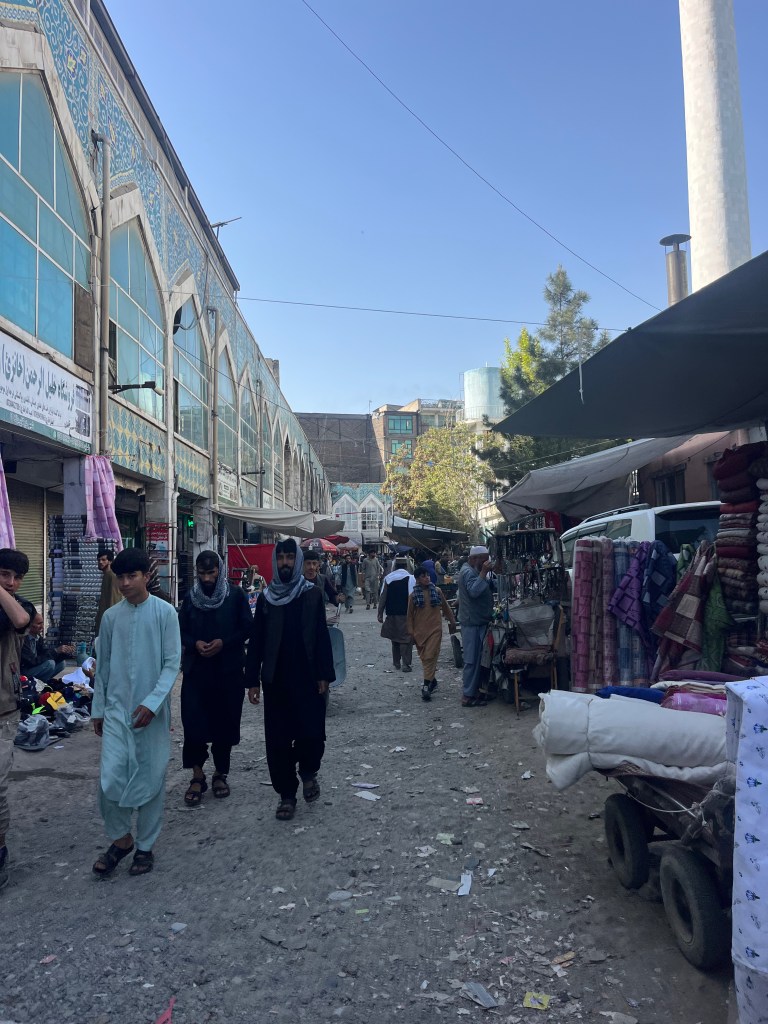
A street in Kabul. Once again, no women.
Now for my interactions with women in Afghanistan. Most of these were very much in passing with women on the streets, and they could not be as open about their feelings and stories in a public setting. We also met some very young girls on their way to school, and they were very shy. It was horrible to realize they were in their last year of education. Maybe ever. The most interesting, and unfortunately the only true conversation I had with an Afghan woman there, was in the women’s bathroom at the Kabul airport as I was leaving the country to go back to Dubai. As my friend and I were fixing our hijabs, an Afghan woman came up to us and asked where we were from, speaking perfect English. She told us that she was a doctor and was returning to Afghanistan after a meeting in Dubai. She was devestated by the situation in her country, and what she said was mind-blowing. Basically, women in Afghanistan are only allowed to be medically treated by women. However, girls are banned from education after 6th grade, obviously meaning that women cannot be trained to become medical professionals. There are some female doctors remaining, such as the woman I was speaking to, but what will the next generation do? This massive female doctor shortage that the Taliban are literally creating, meaning that millions of girls and women cannot seek healthcare, really shows how much they hate half of their own country. As the doctor said in that bathroom in the Kabul airport, “They hate the ones that made them. They hate their mothers, their daughters, their wives. I am glad you are here, but I hope you know the truth”.
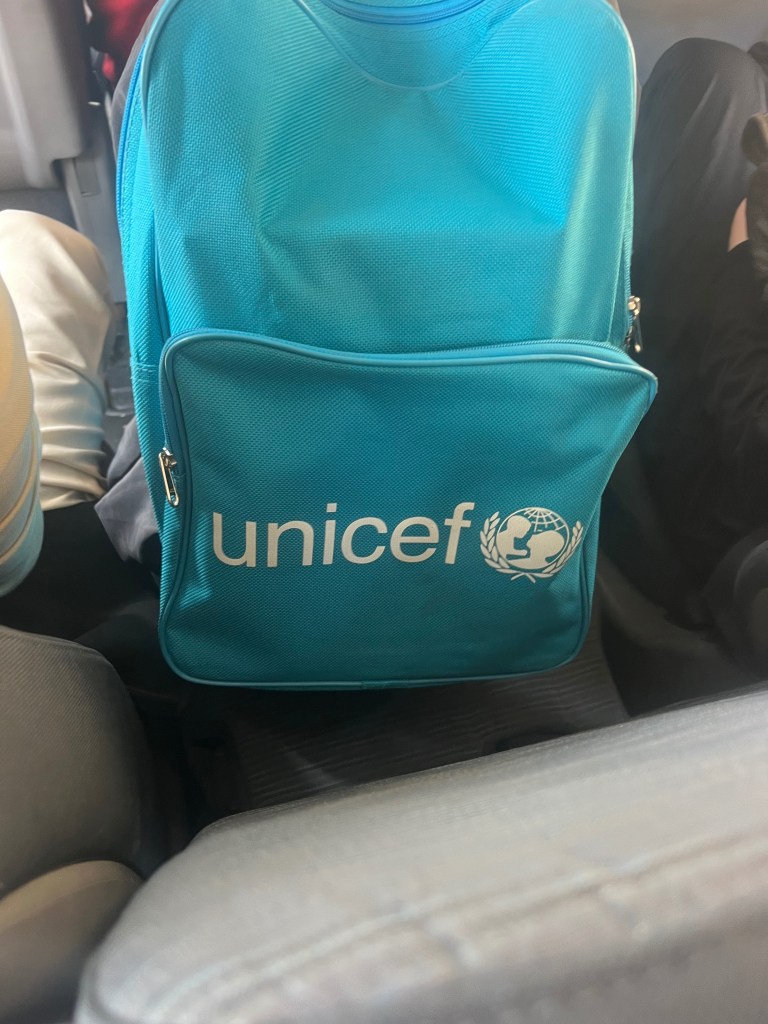
On our drive to Bamiyan, we picked up a couple kids walking miles along the side of the highway to school and dropped them off. This little girl with the UNICEF backpack was in 6th grade, meaning it was her last year of school ever. Only so much UNICEF can do in this country.
In the media, you hear a lot about the situation with women in Afghanistan, and less about the extreme poverty that the country is facing. Something I would say about my experience in Afghanistan is that the severity of the situation with women was slightly more hidden, whereas the poverty was very much visible to the naked eye. It was bad when I was there, and it has gotten even worse since the devastating dismantaling of USAID by Trump. One particular situation stuck out to me. We met a young boy while exploring the blue mosque in Mazar-i-Sharif, and as we were driving home from dinner we saw him again on the side of the road. Sami invited him into our car and we took him for ice cream (sheer yak) with us. He was 16 years old, but looked about 11 on account of the toll that years of malnourishment was taking on his body. His father had broken his back, putting him out of work, and his mother could not work as a result of the Taliban rule, so it became the young boy’s job to support his entire family. Every single day, he and his 4 younger brothers sold old plastic bottles that they found on the streets to try and feed their parents and themselves. We got him a big bowl of ice cream and bought him some new sandals after we noticed his were ripped apart, stapled, and ripped again. The next day we gave money to his father. It was extremely eye-opening to talk with him and hear his story, and it really is just a drop in the ocean in this country. There are millions of children in this boy’s situation in Afghanistan, if not even worse, and no one is helping them. To the outside world they are basically invisible, and Trump has likely killed thousands of these children with the USAID cuts, and millions more are acutely malnourished. As devastating as this is, it needs to be known. We have to bear witness and ensure these children are not forgotten.
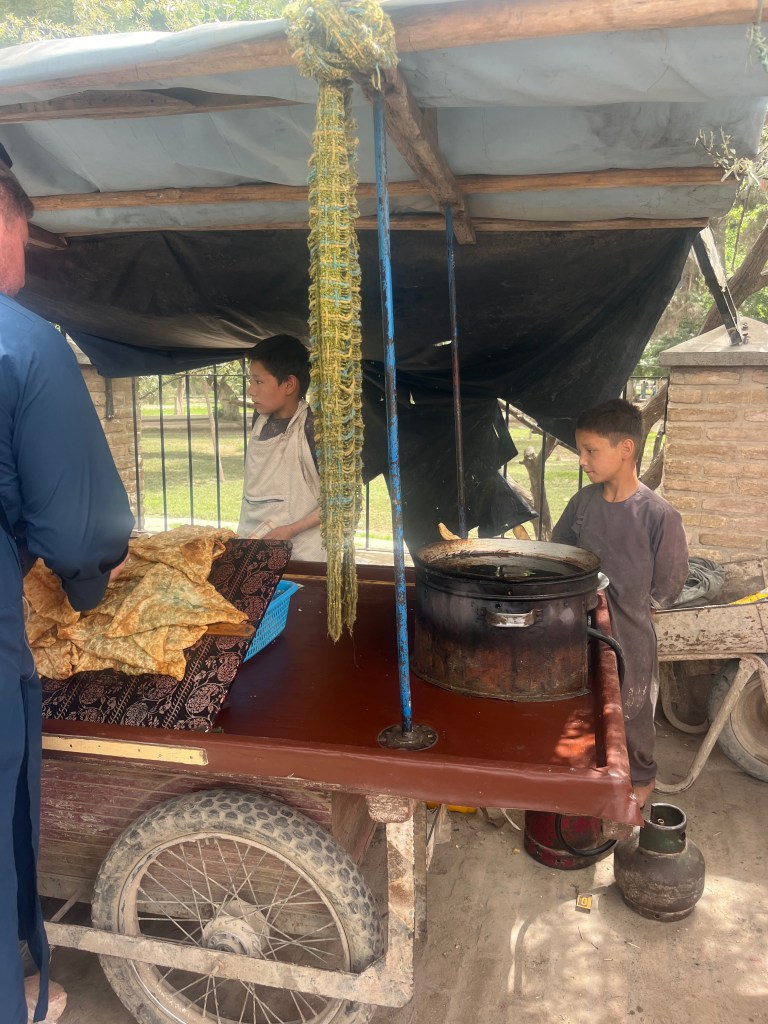
Young boys selling bolani, an Afghan snack.
 Type B, Boarding Group Z
Leave a comment